Hemp Grain as a Superfood: Nutritional Profile, Culinary Uses, and Market Growth
What Is Hemp Grain?
Hemp grain refers to the seed of the hemp plant (Cannabis sativa L.), typically sold as whole seeds, hulled "hemp hearts," or cold-pressed into hemp seed oil. Unlike hemp-derived cannabinoid products, hemp grain contains negligible or no CBD or THC — the nutritional oil and protein come from the seed itself, not the plant's flowers or leaves.
Under the 2018 Farm Bill (Pub. L. 115-334), hemp and its derivatives — including hemp seed and hemp seed oil — were removed from the federal Controlled Substances Act definition of marijuana, provided the crop contains no more than 0.3% delta-9 THC on a dry-weight basis. The USDA's Agricultural Marketing Service oversees hemp production under the federal framework. Hemp grain sold as a food product is regulated by the U.S. Food and Drug Administration (FDA), which recognizes hemp seed, hemp seed oil, and hemp seed protein powder as Generally Recognized as Safe (GRAS) for use in human food — a status affirmed in 2018 notices published in the FDA GRAS database.
In short: hemp grain as food is federally uncontroversial, legally distinct from cannabinoid products, and available in mainstream grocery stores nationwide.
Nutritional Profile: Why Hemp Grain Earns the Superfood Label
Complete Protein
Hemp hearts deliver approximately 9–10 grams of protein per 3-tablespoon (30g) serving — and it's a complete protein, meaning it contains all nine essential amino acids the body cannot produce on its own. This is relatively rare in the plant kingdom. Hemp's protein is rich in arginine and glutamic acid, and provides a favorable ratio of edestin (a globulin highly similar to human blood plasma proteins) and albumin. The protein fraction composition of hemp seed — including the dominance of edestin and its favorable amino acid profile — is documented in peer-reviewed food science literature, including Tang, C.H., Ten, Z., Wang, X.S., & Yang, X.Q. (2006). "Physicochemical and functional properties of hemp (Cannabis sativa L.) protein isolate." Journal of Agricultural and Food Chemistry, 54(23), 8945–8950.
For consumers seeking plant-based protein sources — athletes, vegetarians, vegans, or simply those diversifying their diet — hemp grain offers a whole-food alternative that doesn't require combining with other proteins to achieve completeness.
Optimal Omega Fatty Acid Ratio
Hemp seed oil contains an approximately 3:1 ratio of omega-6 to omega-3 fatty acids, which many nutrition researchers consider close to an ideal dietary balance (USDA FoodData Central, FDC ID 170148). The primary omega-6 is linoleic acid (LA), and the primary omega-3 is alpha-linolenic acid (ALA). Hemp is also one of the few food sources of gamma-linolenic acid (GLA), an omega-6 with distinct properties that is rarely found in common dietary oils and seeds; its presence in hemp seed oil is documented in Callaway, J.C. (2004). "Hempseed as a nutritional resource: An overview." Euphytica, 140(1–2), 65–72.
These fats are essential — meaning the body must obtain them from food — and help maintain healthy cell membranes, among other functions.
Micronutrients and Fiber
A typical 3-tablespoon serving of hemp hearts also provides:
- Magnesium — roughly 45% of the Daily Value (USDA FoodData Central, FDC ID 170148)
- Phosphorus — approximately 33% of the Daily Value (USDA FoodData Central, FDC ID 170148)
- Iron, zinc, and manganese in meaningful quantities
- Vitamin E as a natural antioxidant in the oil fraction
Whole hemp seeds (with the hull intact) add dietary fiber, supporting digestive regularity. Hulled hemp hearts are lower in fiber but easier to blend and cook with.
Culinary Uses: Versatile and Accessible
Hemp grain's mild, slightly nutty flavor makes it one of the most versatile functional ingredients available. It does not require cooking, though it adapts well to heat in many applications.
Everyday Applications
- Smoothies and shakes — blend with fruit, greens, or oat milk for a protein boost without protein powder
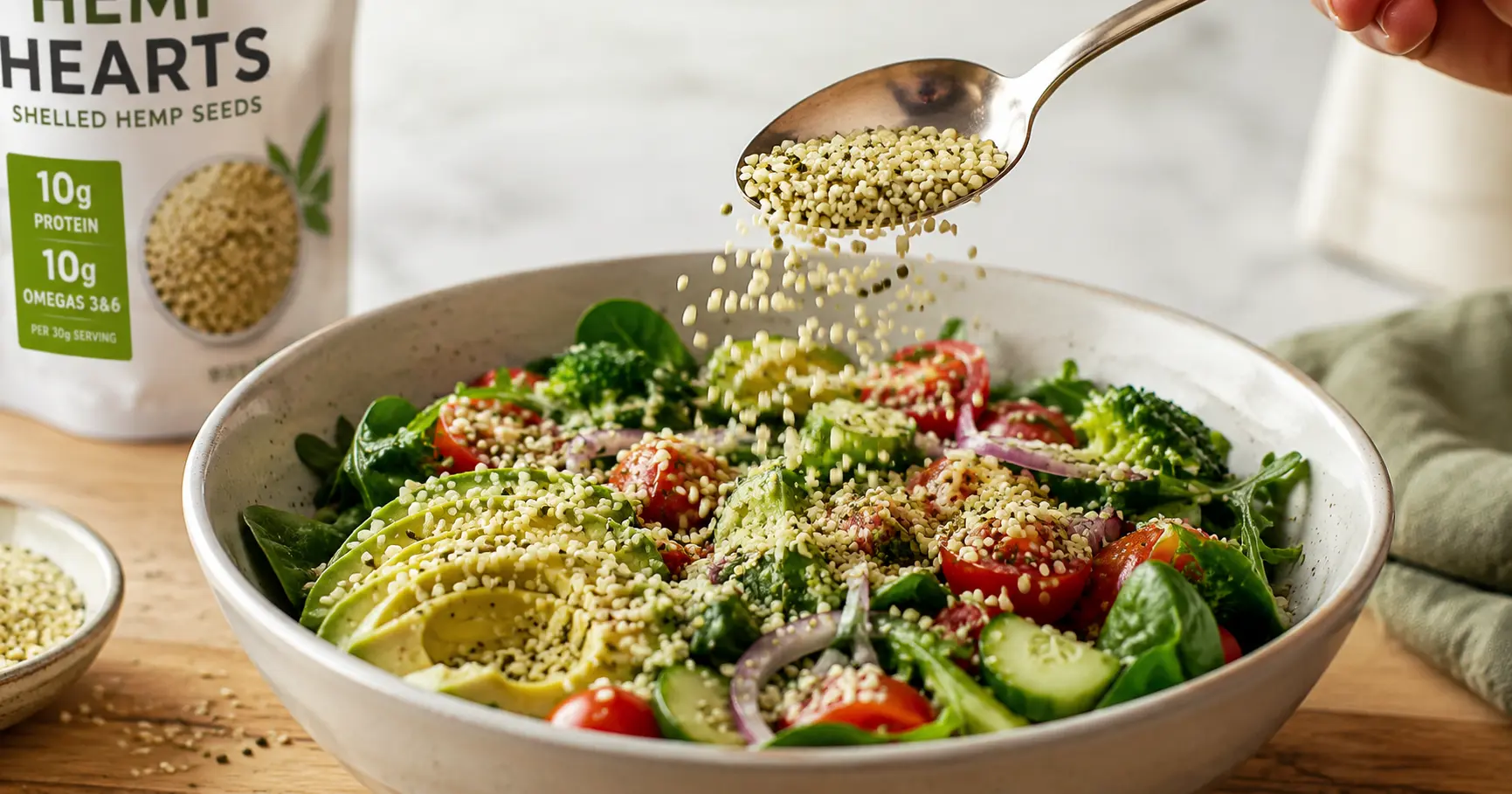
- Salads and grain bowls — sprinkle hemp hearts directly as a topping; they add texture and nutrition without overpowering other flavors
- Oatmeal and yogurt parfaits — stir in for a nutrient-dense breakfast
- Baked goods — incorporate into muffins, energy bars, and bread recipes
- Homemade sauces and dressings — blend into pesto, hummus, or vinaigrettes as a cream-like emulsifier
Hemp Seed Oil in the Kitchen
Cold-pressed hemp seed oil has a rich, grassy flavor suited to finishing dishes — drizzled over pasta, roasted vegetables, or used in dipping sauces. It has a relatively low smoke point (~330°F / 165°C) and is best used cold or at low heat to preserve its fatty acid content.
Market Growth: A Mainstream Ingredient in Motion
The global hemp food market was valued at over $1.3 billion in 2023 and is projected to continue expanding at a compound annual growth rate (CAGR) in the high single digits through the end of the decade, according to Grand View Research's Hemp Market Size, Share & Trends Analysis Report tracking the functional food sector. North America remains the dominant market, driven by consumer interest in plant-based diets, clean-label food products, and sustainable agriculture.
Major U.S. grocery chains — including Whole Foods, Kroger, Sprouts, and Costco — now stock hemp hearts and hemp seed oil as mainstream pantry items. Hemp protein powder has entered the sports nutrition category alongside whey and pea protein. Food manufacturers are incorporating hemp grain into cereals, energy bars, plant-based milk, and pasta.
The growth mirrors a broader shift: consumers are looking past unfamiliarity toward the actual nutritional data — and hemp grain consistently delivers.
Hemp Grain and Sustainable Agriculture
Beyond the plate, hemp grain carries an agricultural sustainability story. Hemp is known for its rapid growth cycle (approximately 70–90 days to harvest, as documented by USDA Agricultural Research Service reports on industrial hemp agronomy and corroborated by state extension services including the University of Kentucky College of Agriculture's hemp production guidance), minimal pesticide requirements, and deep-rooting system that supports soil health. As a dual-use crop, hemp grown for grain can also yield fiber, and the plant sequesters carbon in both its biomass and root system.
For consumers motivated by eco-conscious purchasing, supporting hemp food products is also a vote for a more sustainable crop rotation in American agriculture.
The Bottom Line
Hemp grain is not a trend — it's a nutritionally legitimate, federally legal food ingredient that has been part of human diets in various forms for thousands of years. Its complete protein, balanced fatty acids, and culinary flexibility make it worth understanding, regardless of where you live or what other hemp topics interest you.
Whether you're a longtime hemp advocate or a newcomer curious about what this plant actually offers beyond headlines, hemp grain is one of the easiest and most evidence-backed entry points.
Want to learn more about hemp policy, products, and advocacy in your state? Explore the iHemp network's state-by-state resources and join the growing community of informed hemp supporters working to build a better future for this remarkable crop.