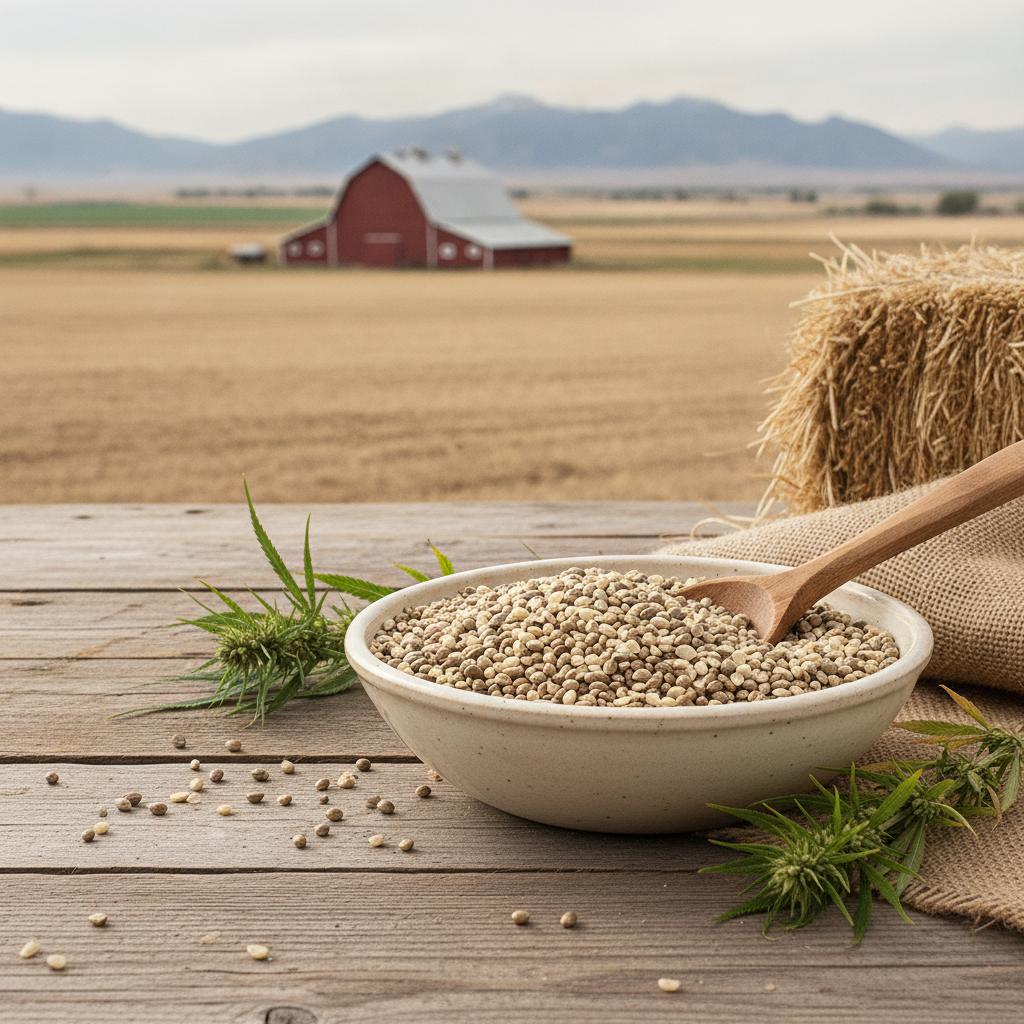
Hemp Feed in 2026: Where the USDA Approval Process Stands and What It Means for Livestock Farmers
Status of USDA petition and what it means for hemp-derived feed ingredients
The Hemp Feed Coalition (HFC) has been pursuing federal approval for hemp-derived ingredients used in livestock feed through two regulatory pathways: an Ingredients Definition Application and a Feed Additive Petition. This dual-track approach is designed to clear hemp’s path from a crop product to a defined feed ingredient, a move supporters say would unlock a new high-value market for grain farmers. For readers seeking the status, the coalition and industry reports point to a regulatory bottleneck that remains unresolved as of mid-2026 Hemp Feed Coalition, with stakeholders continuing to push for a formal USDA decision MPF: US Hemp Feed Coalition driving use of hemp as animal feed.
USDA updates on hemp-related enforcement and rulemaking are evolving. The USDA Agricultural Marketing Service (AMS) has signaled delays and ongoing updates around hemp production and enforcement timelines through 2026, which complicates timely action on hemp feed approvals in parallel with other regulatory duties. This context matters for farm operations planning in 2026 AMS hemp updates.
The broader industry has tracked the petition’s progress alongside related coverage about why hemp in animal feed matters. Trade outlets have highlighted that federal approval would enable hemp and its byproducts to enter formulating pipelines more readily, with ongoing advocacy and research underpinning the push Cannabis Business Times, The Poultry Site.
Legal baseline: Farm Bill 2018 and current legislation
The regulatory foundation for hemp in the U.S. rests on the 2018 Farm Bill (Public Law 115-334), which removed hemp from the list of controlled substances and defined hemp as Cannabis sativa L. with a delta-9 tetrahydrocannabinol (THC) limit of 0.3% on a dry-weight basis. This framework is the backdrop for any consideration of hemp in livestock feed, even as agencies work out how hemp ingredients will be defined and regulated for animal nutrition use. As of publication, readers should verify changes through current legislation and agency rulemaking. See the Farm Bill 2018 text for the statutory baseline and the ongoing regulatory narrative (as of 2026) on Congress.gov and related agency pages Farm Bill 2018 text.
Why this matters for livestock farmers
If and when USDA grants a formal approval, hemp-derived ingredients could become a standard option in formulated rations, seed diets, and feed blends. Proponents say hemp byproducts (such as hemp seed meal and oil) could support nutrient density, while the broader hemp supply chain could stabilize input costs for growers and formulating mills. However, until a decision lands, farmers in the iHemp network—especially in priority states like Indiana and Kentucky, with adjacent markets in Colorado, Illinois, and Michigan—face ongoing uncertainty about procurement, labeling, and compliance pathways for hemp-based feed ingredients HFC materials.
State-by-state context for five target states
- Indiana and Kentucky: These states sit at the crossroads of corn and soybean production with rising interest in hemp co-products. Farmers need clear guidance on state hemp program requirements and any anticipated compatibility with future USDA approvals. State rules vary; verify with your state hemp program before acting.
- Michigan: Michigan’s agricultural and hemp programs have tracked broader federal developments; planners and formulators are watching for a workable federal definition that would harmonize with state requirements.
- Colorado and Illinois: These states are often early adopters of new agricultural inputs; however, hemp feed regulations require careful alignment with both USDA timelines and state labeling/quality standards. In all cases, operators should engage with state extension services and hemp programs to align timing and compliance.
- Across all five states, the practical reality remains: until USDA signs a formal approval, hemp feed strategies should be framed as exploratory and contingent on regulatory clarity. State-level rules vary; verify with your state hemp program before acting.
What’s next and how farmers can stay informed
The core message for farmers is to monitor the Hemp Feed Coalition’s filings, USDA notices, and Farm Bill-level discussions. For operators planning to integrate hemp-derived feed ingredients, the most prudent approach is to structure trial plans around approved label claims, ingredient safety data, and state program requirements, while maintaining a line of communication with extension agents and feed formulating partners. Inline updates from primary sources—USDA AMS pages, the Hemp Feed Coalition, and major trade outlets—will help farmers time investments and procurement decisions appropriately Hemp Feed Coalition, AMS hemp rule pages, Cannabis Business Times.
For readers seeking a deeper legal anchor, recall that the Farm Bill 2018 established the federal framework for hemp while leaving room for agency-level rulemaking on hemp-derived feed ingredients. As this status evolves, stay engaged with hemp advocacy channels to understand how policy developments translate into farm-ready opportunities. Learn more about hemp advocacy and ongoing USDA activity from the Hemp Feed Coalition and related policy resources.
Learn more about hemp advocacy and stay up to date with the USDA process: Hemp Feed Coalition.