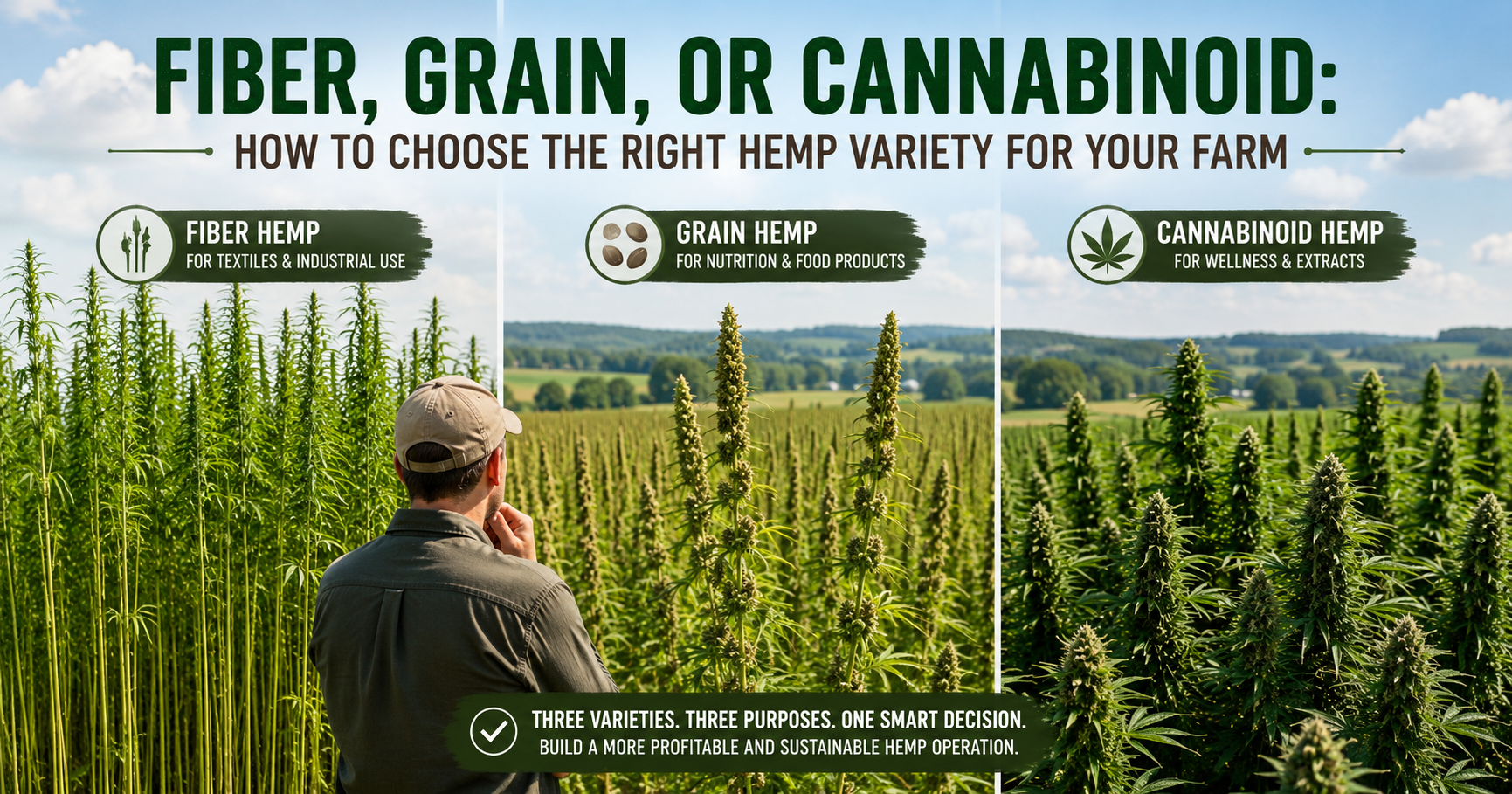
Fiber, Grain, or Cannabinoid: How to Choose the Right Hemp Variety for Your Farm
Choosing a hemp variety is a foundational decision for new and growing farms. The market you target—fiber, grain, or cannabinoids—drives the traits you prioritize, the breeding history you rely on, and the timing of harvest and processing. This piece outlines a practical framework to help farmers align variety choice with their end use, equipment, and local regulations. As of publication, verify with the relevant agencies before taking action.
Understanding hemp as three market paths
Hemp is grown as distinct crops depending on end use. Fiber-focused varieties are bred for long stems and strong fiber quality; grain varieties emphasize seed traits for meal or oil; cannabinoid-focused lines target seed-to-plant chemistry with regulated delta-9 THC levels. Recognizing this split helps you set expectations for yield, inputs, and timing.
- Fiber genetics and agronomy: Look for tall, robust plants with strong stalks and high fiber yield potential. These selections tend to favor field-scale, lower-density planting and later harvest windows aligned with fiber processing mills. The goal is to maximize fiber quality while maintaining stand longevity.
- Grain genetics and agronomy: Grain-type varieties emphasize seed traits such as oil and protein content, seed size, and harvest timing. They often require different planting densities and weed management compared with fiber types to protect seed quality at maturity.
- Cannabinoid genetics and agronomy: These varieties are bred to optimize cannabinoid content within the legal delta-9 THC limits and must meet regulatory testing standards. The core constraint is that hemp must remain within the federally defined THC threshold, a standard carried forward from the 2018 Farm Bill USDA FAQ and FDA. As of publication, check current state programs for any additional limits or testing requirements.
Aligning agronomy with variety choice
Your choice of variety will influence several practical decisions.
- Planting density and row spacing: Fiber crops often favor spacing that supports tall, fibrous stalk development, while grain crops prioritize seed establishment and uniform maturation. Cannabinoid crops require tight, uniform stands to ensure consistent cannabinoid profiles and reliable sampling for testing.
- Harvest timing and processing: Fiber varieties are typically harvested when stems reach target fiber maturity; grain varieties at seed physiological maturity; cannabinoid crops at stage targets aligned with regulatory testing windows. Aligning harvest with processing capacity (fiber mills, seed processors, or extraction facilities) helps optimize value.
- Input management: Fertility, irrigation, and pest pressure interact with variety genetics. Fiber crops may demand longer-duration stands and different nutrition for fiber quality; grain crops focus on seed health and oil/protein targets; cannabinoid crops emphasize stability of cannabinoid levels and compliance-testing readiness.
Regulatory anchors for hemp varieties
- The 2018 Farm Bill defines hemp and sets a national threshold for delta-9 THC at 0.3% on a dry weight basis. This threshold is central to legality and licensing in most states and carries through to how seed and harvested material are evaluated. See the FDA’s overview of hemp production and the Farm Bill, which clarifies this framework FDA and the USDA FAQ on testing and compliance USDA FAQ.
- For readers seeking a compact legal primer and discussion of the threshold and its implications, see the Congressional Research Service overview Congress.gov primer. Always verify a given state's program and deadlines, since state rules may add or refine requirements beyond the federal baseline.
Practical steps for farmers
- Define market target before selecting seed: fiber, grain, or cannabinoid. This decision dictates likely processing partners, harvest windows, and profitability pathways.
- Consult reputable seed suppliers and regional agronomy services to compare varieties with your climate and soil type. Look for variety performance histories in similar production zones.
- Build a simple timeline that links planting date, canopy development, and expected harvest or processing milestones for your chosen path.
- Confirm with state hemp program requirements and any testing protocols you must follow, including delta-9 THC testing methods and reporting timelines.
Research-backed planning helps avoid common first-year errors and aligns farming decisions with regulatory expectations. These steps support a stable start and a smoother path to profitability in fiber, grain, or cannabinoid production.
Conclusion and call to action
Choosing the right hemp variety starts with your target market and a clear plan for harvest, processing, and compliance. By aligning genetics, field practices, and regulatory requirements, you can build a resilient foundation for a successful hemp operation. Learn more about hemp variety selection and industry updates at iHemp International and engage with policy discussions to stay current with evolving requirements and opportunities in your state and nationwide.